Ethics
Of how to live and what to do.
Bioethics
The forum for moral sciences is a major hub of research in bioethics. We conduct cutting-edge research on the ethical frontiers of human life, and investigates both how scientific advancements should be used to improve human life and what should be done for patients at the sunset of life. Bio-engineering and enhancement has the potential to make us stronger, smarter, more emotionally receptive, and maybe even better people. Should we use science to improve ourselves in these ways, or does that threaten the possibility of an authentic human life? And what should we do when the science runs out and patients are faced with the inevitability of death? What care do we owe the terminally ill? What care do we owe those who are not in danger of dying soon but whose unimprovably bad health state make life unbearable to them?
Principal researchers
Leads: Emma Gordon, Ben Colburn
Phd students: Alison Nunziante
Publications
Books:
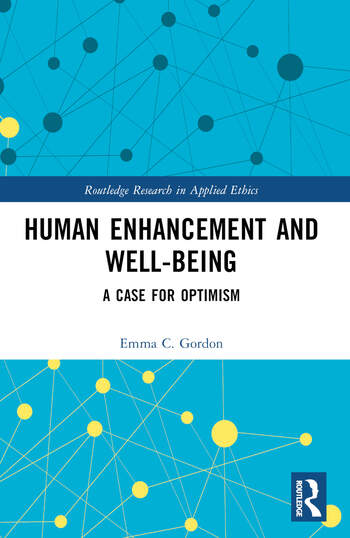
- Gordon, E. C. (2022) Human Enhancement and Well-Being: A Case for Optimism. Series: Routledge research in applied ethics. Routledge. ISBN 9780367702205 (doi: 10.4324/9781003147992)
Articles:
- Carter, M. (2023) The imperative of professional dementia care. Bioethics, 37(3), pp. 292-302. (doi: 10.1111/bioe.13095) (PMID:36217987)
- Carter, M. (2022) The indirect approach: towards non-dominating dementia care. Res Publica, 28, pp. 467-480. (doi: 10.1007/s11158-021-09540-1)
- Carter, M. (2021) Grief, trauma and mistaken identity: Ethically deceiving people living with dementia in complex cases. Bioethics, 35(9), pp. 850-856. (doi: 10.1111/bioe.12963)
- Colburn, B. (2025) Palliative care-based arguments against assisted dying. Bioethics, 39(2), pp. 187-194. (doi: 10.1111/bioe.13352) (PMID:39360468) (PMCID:PMC11754995)
- Colburn, B. and Johnston, B. (2023) Palliative sedation: autonomy, suffering, and euthanasia. Current Opinion in Supportive and Palliative Care, 17(3), pp. 214-218. (doi: 10.1097/SPC.0000000000000665) (PMID:37428181)
- Colburn, B. (2022) Disability-based arguments against assisted dying laws. Bioethics, 36(6), pp. 680-686. (doi: 10.1111/bioe.13036) (PMID:35389513) (PMCID:PMC9322678)
- Colburn, B. (2020) Autonomy, voluntariness, and assisted dying. Journal of Medical Ethics, 46(5), pp. 316-319. (doi: 10.1136/medethics-2019-105720) (PMID:31719156)
- Gordon, E. C., Cheung, K., Earp, B. D. and Savulescu, J. (2024) Moral enhancement and cheapened achievement: psychedelics, virtual reality and AI. Bioethics, (doi: 10.1111/bioe.13374) (PMID:39564905) (Early Online Publication)
- Corns, J. and Cowan, R. (2020) Lessons for ethics from the science of pain. In: Holtzman, G. S. and Hildt, E. (eds.) Does Neuroscience Have Normative Implications? Series: The international library of ethics, law and technology (22). Springer: Cham, pp. 39-57. ISBN 9783030561338 (doi: 10.1007/978-3-030-56134-5_3)
- Gordon, E. C. (2024) Cognitive enhancement, hyperagency, and responsibility explosion. Journal of Medicine and Philosophy, 49(5), pp. 488-498. (doi: 10.1093/jmp/jhae025) (PMID:38913851) (PMCID:PMC11369811)
- Gordon, E. C. (2024) Human enhancement and augmented reality. Philosophy and Technology, 37, 17. (doi: 10.1007/s13347-024-00702-6)
- Gordon, E. C. and Ragonese, V. (2023) Cognitive and moral enhancement: a practical proposal. Journal of Applied Philosophy, 40(3), pp. 474-487. (doi: 10.1111/japp.12619)
- Gordon, E. C. and Willis, R. J. (2023) Pharmacological cognitive enhancement and the value of achievements: an intervention. Bioethics, 37(2), pp. 130-134. (doi: 10.1111/bioe.13107) (PMID:36399109)
- Gordon, E. C. and Dodds, C. (2023) High altitude, enhancement, and the ‘spirit of sport’. Journal of the Philosophy of Sport, 50(1), pp. 63-82. (doi: 10.1080/00948705.2023.2168679)
- Gordon, E. C. (2022) Trust and psychedelic moral enhancement. Neuroethics, 15(2), 19. (doi: 10.1007/s12152-022-09497-9)
- Gordon, E. C. (2022) Cognitive enhancement and authenticity: moving beyond the impasse. Medicine, Health Care and Philosophy, 25(2), pp. 281-288. (doi: 10.1007/s11019-022-10075-2) (PMID:35471685) (PMCID:PMC9135843)
- Gordon, E. C. (2022) The ethics of cognitive enhancement. Internet Encyclopedia of Philosophy, (Accepted for Publication)
- Carter, J. A. , Gordon, E. and Grodniewicz, J.P. (2021) Understanding a communicated thought. Synthese, 198(12), pp. 12137-12151. (doi: 10.1007/s11229-020-02854-2)
- Gordon, E. C. and Dunn, L. (2021) Pharmacological cognitive enhancement and cheapened achievement: a new dilemma. Neuroethics, 14(3), pp. 409-421. (doi: 10.1007/s12152-021-09477-5)
- Carter, J. A. and Gordon, E. C. (2015) On cognitive and moral enhancement: a reply to Savulescu and Persson. Bioethics, 29(3), pp. 153-161. (doi: 10.1111/bioe.12076)
- Slater, J. (2023) The SIA can’t just go with the FLO. HEC Forum, (doi: 10.1007/s10730-023-09510-5) (Early Online Publication)
Research reports
- Colburn, B. , Cholbi, M., Gill, M., Millum, J. and Pettigrove, G. (2024) Palliative Care and Assisted Dying Laws.
- Millum, J., Cholbi, M., Colburn, B. , Gill, M. and Pettigrove, G. (2023) Assisted dying in Australia, Canada, and New Zealand: Lessons for Scotland.
- Colburn, B. (2021) Policy Briefing: Disability and Assisted Dying Laws.
Virtue ethics lab
Virtue ethics studies the significance of moral character and how it endows value on the world. Living a successful moral life is not merely a matter of doing what’s right or desiring what’s good. It is also and perhaps most fundamentally a matter of being a good sort of person — a person who relates well to others, who is well attuned to their needs, has discerning judgment and a good sense of proportion and who has the courage to make hard choices. How can one cultivate these virtuous character traits? Which character traits even are virtuous and worth cultivating? And how should a concern for cultivating virtue properly inform our choices and sense of priorities?
Principal researchers
Leads: Glen Pettigrove, Michael Brady, and Nicolas Côté
Phd students: Sarah Heitler
Publications
Books
- Carter, M (2025) The Bloomsbury Handbook of Care Ethics Bloomsbury Publishing. (isb: 9781350428379)
- Brady, M. (2018) Emotion: The Basics. Series: The basics. Routledge: Abingdon, Oxon ; New York. ISBN 9781138081376
Articles:
- Brady, M.S. and Pritchard, D. (2006) Epistemic Virtue and Virtue Epistemology [Special issue]. Philosophical Studies, 130, pp. 1-152.
- Brady, M.S. (2005) The value of the virtues. Philosophical Studies, 125(1), pp. 85-113. (doi: 10.1007/s11098-005-7788-7)
- Pettigrove, G. (2024) What virtue adds to value. Australasian Philosophical Review, 6(2), pp. 113-128. (doi: 10.1080/24740500.2022.2263950)
- Pettigrove, G. (2022) Creativity and the value of virtue. Australasian Philosophical Review, 6(2), pp. 204-218. (doi: 10.1080/24740500.2022.2263965)
- Pettigrove, G. (2015) Re-conceiving character: The social ontology of Humean virtue. Res Philosophica, 92(3), pp. 595-619. (doi: 10.11612/resphil.2015.92.3.3)
- Pettigrove, G. (2011) Is virtue ethics self-effacing? Journal of Ethics, 15(3), pp. 191-207. (doi: 10.1007/s10892-010-9089-4)
Book sections:
- Pettigrove, G. (2023) The virtue of forgiveness? In: Pettigrove, G. and Enright, R. (eds.) The Routledge Handbook of the Philosophy and Psychology of Forgiveness. Routledge. ISBN 9780367030728 (Accepted for Publication)
- Pettigrove, G. (2018) Alternatives to neo-Aristotelian virtue ethics. In: Snow, N. E. (ed.) The Oxford Handbook of Virtue. Series: Oxford handbooks. Oxford University Press: New York, pp. 359-376. ISBN 9780199385195 (doi: 10.1093/oxfordhb/9780199385195.013.31)
- Hursthouse, R. and Pettigrove, G. (2016) Virtue Ethics. In: Zalta, E. N. (ed.) The Stanford Encyclopedia of Philosophy. Stanford University: Stanford, CA.
- Perrett, R. W. and Pettigrove, G. (2015) Hindu virtue ethics. In: Besser, L. L. and Slote, M. (eds.) The Routledge Companion to Virtue Ethics. Routledge. ISBN 9780415659338
- Pettigrove, G. (2014) Virtue ethics, virtue theory, and moral theology. In: van Hooft, S. (ed.) The Handbook of Virtue Ethics. Acumen, pp. 88-104. ISBN 9781844656394

Moral psychology lab
Our research stream in moral psychology explores the role of emotions in our moral life, as well as the psychology of pain and suffering. Our major stream of research concerns the epistemology and normativity of the moral sentiments: what makes emotions such as love, resentment, and forgiveness appropriate? What role do they play in motivating us to action? And what role do they have, if any, in supporting our claims to moral knowledge? Our second major stream of research concerns the nature of pain and suffering: what are they? What is the normative status of pain’s unpleasantness? Is suffering always bad for you?
Principal researchers
Leads: Glen Pettigrove, Robert Cowan, Emma Gordon, Michael Brady
Phd students: Sarah Heitler, Carina Engler, Esther Meeks, Michael Quinn
Publications
Books:
- Bain, D. , Brady, M. and Corns, J. (Eds.) (2019) Philosophy of Suffering: Metaphysics, Value, and Normativity. Routledge. ISBN 9780815361787
- Bain, D., Brady, M. and Corns, J. (Eds.) (2018) Philosophy of Pain: Unpleasantness, Emotion, and Deviance. Routledge: Abingdon, Oxon ; New York, NY. ISBN 9780815361640
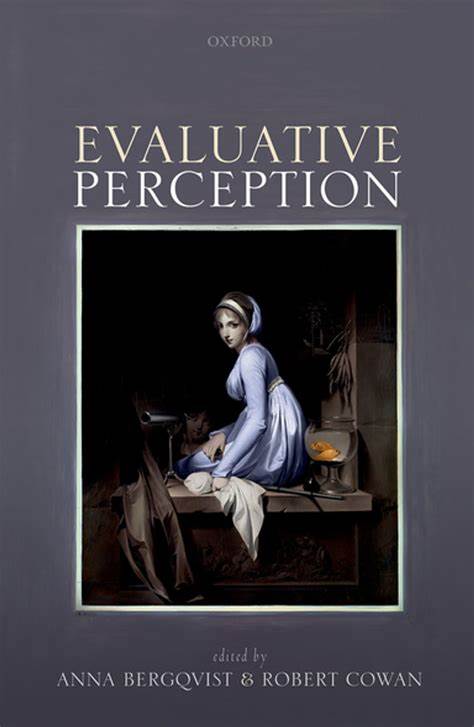
- Bergqvist, A. and Cowan, R. eds. (2018) Evaluative Perception. Series: Mind association occasional series. Oxford University Press: Oxford. ISBN 9780198786054
- Brady, M.S. (2013) Emotional Insight: The Epistemic Role of Emotional Experience. Oxford University Press. ISBN 9780199685523
- Corns, J. (2020) The Complex Reality of Pain. Series: Routledge studies in contemporary philosophy. Routledge. ISBN 9780367353698 (doi: 10.4324/9780429342981)
- Pettigrove, G. (2012) Forgiveness and Love. Oxford University Press. ISBN 9780199646555 (doi: 10.1093/acprof:oso/9780199646555.001.0001)
Articles:
- Brady, M. S. (2025) Why we should be experientialists about suffering. Cambridge Quarterly of Healthcare Ethics, (doi: 10.1017/S096318012500009X) (PMID:39910809) (Early Online Publication)
- Brady, M. S. (2023) Suffering as experiential – a response to Jennifer Corns. Philosophy and Phenomenological Research, 107(1), pp. 24-30. (doi: 10.1111/phpr.12863)
- Brady, M. and Jayawickreme, E. (2023) A philosophical approach to improving empirical research on posttraumatic growth. Philosophical Psychology, (doi: 10.1080/09515089.2023.2213251) (Early Online Publication)
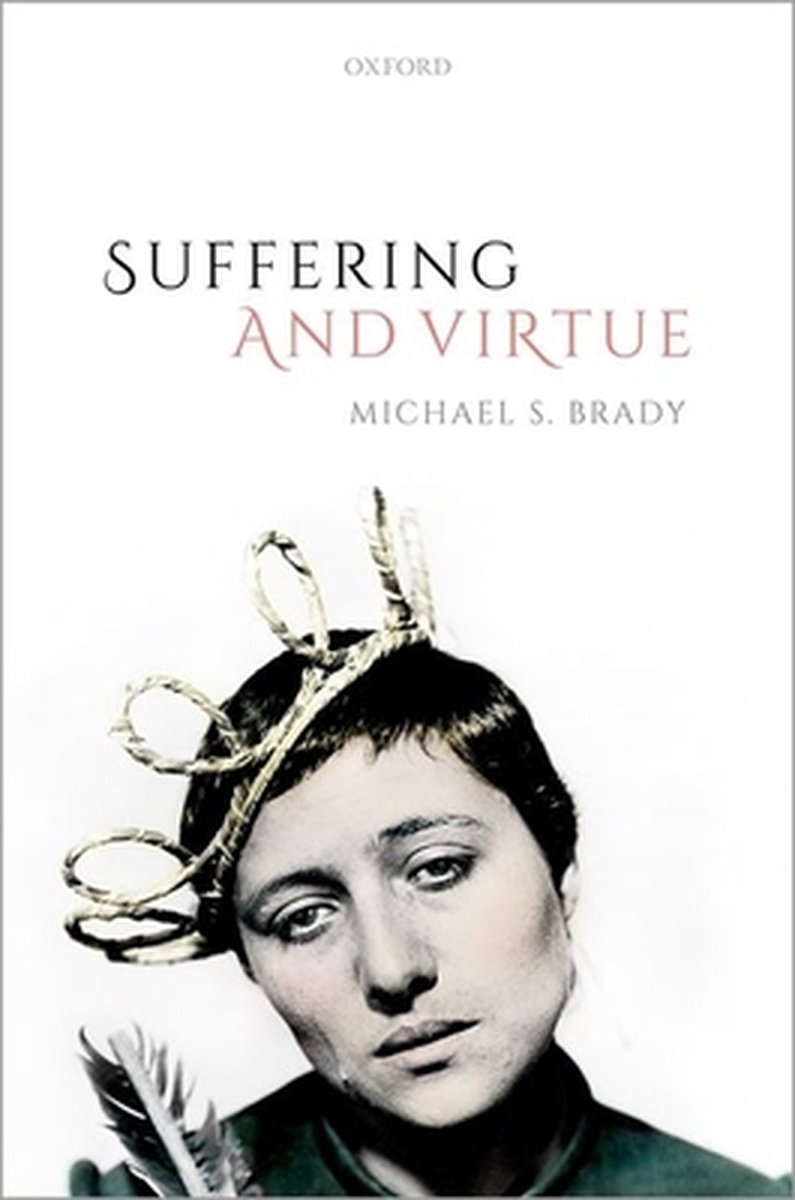
- Brady, M. (2021) Precis of suffering and virtue. Journal of Value Inquiry, 55, pp. 567-569. (doi: 10.1007/s10790-021-09862-6)
- Brady, M. (2021) Response to commentators on Suffering and Virtue. Journal of Value Inquiry, 55, pp. 611-623. (doi: 10.1007/s10790-021-09863-5)
- Brady, M. S. (2019) Why suffering is essential for wisdom. Journal of Value Inquiry, 53, pp. 467-469. (doi: 10.1007/s10790-019-09707-3)
- Brady, M. S. (2019) Suffering in sport: why people willingly embrace negative emotional experiences. Journal of the Philosophy of Sport, 46(2), pp. 115-128. (doi: 10.1080/00948705.2019.1615837)
- Brady, M. S. (2018) Painfulness, desire, and the Euthyphro dilemma. American Philosophical Quarterly, 55(3), pp. 239-250.
- Brady, M. S. (2015) Feeling bad and seeing bad. Dialectica, 69(3), pp. 403-416. (doi: 10.1111/1746-8361.12110)
- Bain, D. and Brady, M. (2014) Pain, pleasure, and unpleasure. Review of Philosophy and Psychology, 5(1), pp. 1-14. (doi: 10.1007/s13164-014-0176-5)
- Brady, M.S. (2010) Disappointment. Aristotelian Society Supplementary Volume, 84(1), pp. 179-198. (doi: 10.1111/j.1467-8349.2010.00191.x)
- Brady, M.S. (2010) Virtue, emotion and attention. Metaphilosophy, 41(1-2), pp. 115-131. (doi: 10.1111/j.1467-9973.2009.01620.x)
- Brady, M.S. (2009) The irrationality of recalcitrant emotions. Philosophical Studies, 145(3), pp. 413-430. (doi: 10.1007/s11098-008-9241-1)
- Brady, M.S. (2008) Value and fitting emotions. Journal of Value Inquiry, 42(4), pp. 465-475. (doi: 10.1007/s10790-008-9134-8)
- Brady, M.S. (2007) Recalcitrant emotions and visual illusions. American Philosophical Quarterly, 44(3), pp. 273-284.
- Brady, M.S. (2006) Appropriate attitudes and the value problem. American Philosophical Quarterly, 43(1), pp. 91-99.
- Carter, J. A. , Gordon, E. C. and Palermos, S. O. (2016) Extended emotion. Philosophical Psychology, 29(2), pp. 198-217. (doi: 10.1080/09515089.2015.1063596)
- Corns, J. and Cowan, R. (2021) Moral motivation and the affective appeal. Philosophical Studies, 178(1), pp. 71-94. (doi: 10.1007/s11098-020-01421-2)
- Corns, J. (2024) Pain and suffering: in conversation with Paul Ricœur. Études Ricœuriennes / Ricœur Studies, 15(2), pp. 82-94. (doi: 10.5195/errs.2024.672)
- Corns, J. (2022) Suffering as significantly disrupted agency. Philosophy and Phenomenological Research, 105(3), pp. 706-729. (doi: 10.1111/phpr.12841)
- Corns, J. (2018) Recent work on pain. Analysis, 78(4), pp. 737-753. (doi: 10.1093/analys/any055)
- Corns, J. (2022) Pain, the body, and awareness. In: Alsmith, A. J.T. and Longo, M. R. (eds.) The Routledge Handbook of Bodily Awareness. Routledge, pp. 355-365. ISBN 9780367337315 (doi: 10.4324/9780429321542-31)
- Cowan, R. (2024) Getting lucid about lucid dreaming. Philosophical Quarterly, (doi: 10.1093/pq/pqae138) (Early Online Publication)
- Carter, J. A. and Cowan, R. (2024) Safety and dream scepticism in Sosa’s epistemology. Synthese, 203, 180. (doi: 10.1007/s11229-024-04577-0)
- Cowan, R. (2023) Dreams, morality and the waking world. Pacific Philosophical Quarterly, 104(1), pp. 2-29. (doi: 10.1111/papq.12397)
- Cowan, R. (2023) Moral responsibility while dreaming. Ergo, 10, 53. (doi: 10.3998/ergo.5190)
- Cowan, R. (2020) The puzzle of moral memory. Journal of Moral Philosophy, 17(2), pp. 202-228. (doi: 10.1163/17455243-20192914)
- Pettigrove, G. (2019) Attitudes and practices. Australasian Philosophical Review, 3(3), pp. 288-304. (doi: 10.1080/24740500.2020.1859233)
- Pettigrove, G. (2015) Re-conceiving character: The social ontology of Humean virtue. Res Philosophica, 92(3), pp. 595-619. (doi: 10.11612/resphil.2015.92.3.3)
- Pettigrove, G. and Tanaka, K. (2014) Anger and moral judgment. Australasian Journal of Philosophy, 92(2), pp. 269-286. (doi: 10.1080/00048402.2013.795990)
- Pettigrove, G. (2012) Forgiveness without God? Journal of Religious Ethics, 40(3), pp. 518-544. (doi: 10.1111/j.1467-9795.2012.00534.x)
- Pettigrove, G. and Parsons, N. (2012) Shame: a case study of collective emotion. Social Theory and Practice, 38(3), pp. 504-530. (doi: 10.5840/soctheorpract201238327)
- Pettigrove, G. (2012) Meekness and ‘moral’ anger. Ethics, 122(2), pp. 341-370. (doi: 10.1086/663230)
- Pettigrove, G. (2007) Ambitions. Ethical Theory and Moral Practice, 10(1), pp. 53-68. (doi: 10.1007/s10677-006-9044-4)
- Pettigrove, G. (2007) Understanding, excusing, forgiving. Philosophy and Phenomenological Research, 74(1), pp. 156-175. (doi: 10.1111/j.1933-1592.2007.00007.x)
- Pettigrove, G. (2006) Hannah Arendt and collective forgiving. Journal of Social Philosophy, 37(4), pp. 483-500. (doi: 10.1111/j.1467-9833.2006.00353.x)
- Pettigrove, G. (2004) Unapologetic forgiveness. American Philosophical Quarterly, 41(3), pp. 187-204.
- Pettigrove, G. (2004) The forgiveness we speak: the illocutionary force of forgiving. Southern Journal of Philosophy, 42(3), pp. 371-392. (doi: 10.1111/j.2041-6962.2004.tb01938.x)
- Pettigrove, G. (2003) Apology, reparations, and the question of inherited guilt. Public Affairs Quarterly, 17(4), pp. 319-348.
Book sections
- Pettigrove, G. (2022) Cheerfulness. In: Pettigrove, G. and Swanton, C. (eds.) Neglected Virtues. Routledge: London, pp. 138-160. ISBN 9780429435201 (doi: 10.4324/9780429435201-7)
- Pettigrove, G. (2016) Passions, perceptions, and motives: fault-lines in Hutcheson’s account of moral sentiment. In: Kerr, H., Lemmings, D. and Phiddian, R. (eds.) Passions, Sympathy and Print Culture: Public Opinion and Emotional Authenticity in Eighteenth-Century Britain. Series: Palgrave studies in the history of emotions. Palgrave Macmillan, pp. 203-222. ISBN 9781137455406
- Pettigrove, G. (2015) Forgiveness. In: Audi, R. (ed.) The Cambridge Dictionary of Philosophy [3rd edition]. Cambridge University Press, p. 369. ISBN 9781107015050
Ethics & technology
Technology has transformed our relationships with each other and with ourselves, and the rapid growth of A.I. portends a brave new world in which the place of human beings in the society we have built may become utterly unrecognizable to us. Artificial intelligence also challenges our traditional concepts of understanding and assertion: does ChatGPT understand what it says, for example? And what should we say about its “hallucinations” — is ChatGPT really hallucinating, or is it bullshitting us? What guardrails should there be on the use and development of intelligent technologies like generative A.I. and autonomous robots?
Principal researchers
Leads: Joe Slater, Emma Gordon, Ben Colburn
PhD students: Will Gopal, Ding Yiheng, Danni Deans
Publications
Articles:
- Gordon, E. C. (2022) Virtual reality and technologically mediated love. Kennedy Institute of Ethics Journal, 32(4), pp. 329-357. (doi: 10.1353/ken.2022.0027)
- Slater, J. and Towsen Hicks, M. (2024) Tech bullshit. Contralytic, 3, pp. 31-33.
- Slater, J. , Humphries, J. and Hicks, M. T. (2024) ChatGPT Isn’t ‘Hallucinating’—It’s Bullshitting! Scientific American, 17 July.
- Hicks, M. T. , Humphries, J. and Slater, J. (2024) ChatGPT is bullshit. Ethics and Information Technology, 26, 38. (doi: 10.1007/s10676-024-09775-5)
Research reports